Mastering Digital Roman Tattoo Art with Specialized Procreate Brushes and Stencils
The intersection of ancient artistic traditions and modern digital technology has created a vibrant new niche for tattoo artists and illustrators. Among the most compelling styles to emerge in this digital space is the Roman aesthetic, characterized by bold lines, classical motifs, and intricate geometric patterns. For professionals seeking to refine their craft or hobbyists looking to explore historical design elements, the integration of specialized tools is essential. Utilizing a comprehensive suite of Tattoo Brushes Roman Tattoo Stencil resources within the Procreate ecosystem allows creators to bridge the gap between traditional ink work and digital precision. This approach not only accelerates the design process but also ensures that the final output maintains the authenticity and gravitas associated with Roman artistry.
The Technical Foundation for Digital Tattoo Design
Before diving into the creative possibilities, it is crucial to establish the technical environment required to leverage these advanced digital assets effectively. The fidelity of Roman tattoo designs, which often rely on sharp contrasts and precise linework, demands hardware and software capable of handling high-resolution inputs without latency. The primary platform for this workflow is the iPad Pro, paired with an Apple Pencil or a comparable stylus that supports robust pressure sensitivity. This combination ensures that every stroke, from the faintest sketch line to the boldest fill, is captured with nuanced accuracy.
Software compatibility is equally critical. The Procreate app, specifically version 5.0 and higher, serves as the engine for this creative process. This version introduced significant improvements in brush stabilization and layer management, which are vital when working with complex stencil overlays. When artists utilize Tattoo Brushes Roman Tattoo Stencil packs, they are relying on the app’s ability to render thousands of particles and texture maps in real-time. Without the correct setup, the intricate details of Roman numerals, laurel wreaths, and architectural elements may appear pixelated or lack the necessary depth to serve as viable tattoo references.
Deconstructing the Brush and Stencil Ecosystem
A professional-grade digital asset pack is more than a collection of images; it is a curated toolkit designed to mimic the physical experience of tattooing while offering the flexibility of digital editing. A typical high-quality package includes multiple zip files containing distinct categories of tools. Understanding the specific role of each component helps artists maximize their efficiency and creative output.
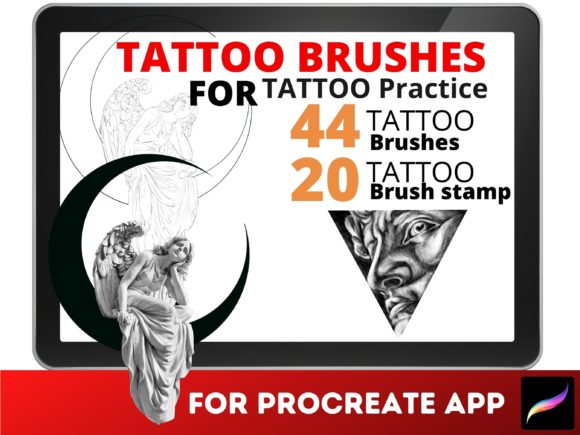
- 44 Tattoo Needle Brushes: These brushes simulate various needle configurations, such as liners, shaders, and magnums. They are engineered to respond dynamically to pressure and tilt, allowing for organic variation in line weight that mimics hand-poked or machine-driven ink deposition.
- 10 Roman Tattoo Designs Brushes: Unlike standard shape stamps, these brushes are crafted to create seamless patterns inspired by Roman mosaics, column fluting, and classical borders. They enable rapid iteration of background textures and decorative frames.
- 10 Roman Tattoo Stencils Brushes: These are perhaps the most valuable tools for planning. They provide pre-defined outlines of iconic Roman symbols, including eagles, gladiator helmets, and Latin script styles. Using these as a base allows artists to focus on customization rather than starting from scratch.
The inclusion of these diverse tools within a single Tattoo Brushes Roman Tattoo Stencil collection ensures that artists have everything needed to move from concept to completion without switching between multiple apps or purchasing disparate assets. The best practice involves using these tools on a canvas sized at 5000x5000 pixels with a resolution of 300 DPI. This high-resolution standard is non-negotiable for professional work, as it ensures that the design remains crisp when printed for client approval or transferred to skin via thermal printers.
Practical Applications and Workflow Integration
Integrating these digital tools into a daily workflow requires a shift in mindset from purely manual drawing to a hybrid approach of selection, modification, and refinement. For a tattoo artist, the process often begins with a client consultation where a Roman theme is requested. Instead of spending hours sketching basic structures, the artist can select a relevant stencil from the Tattoo Brushes Roman Tattoo Stencil set. This provides an immediate structural foundation that is historically accurate and aesthetically balanced.
Once the stencil is placed, the artist uses the needle brushes to add custom details. For instance, a Roman numeral date might be selected from the stencil library, but the client may want it integrated into a larger piece featuring a laurel wreath. The artist can use the design brushes to generate the wreath quickly, then switch to fine-liner needle brushes to weave the numerals through the leaves naturally. This layering technique demonstrates the power of digital tools: they handle the repetitive, structurally complex elements, freeing the artist to focus on composition and flow.
Educators and students also benefit significantly from this approach. In a learning environment, practicing the consistent line work required for Roman lettering can be tedious. By using these brushes, students can study the underlying geometry of the designs without being discouraged by initial technical imperfections. It allows them to understand spacing, balance, and negative space before committing to freehand execution. This method accelerates the learning curve and builds confidence in handling classical motifs.
Navigating Licensing and Ethical Usage
While the creative potential of these digital assets is vast, it is imperative to understand the legal and ethical boundaries governing their use. Digital products, particularly those sold on platforms like Etsy, come with specific licensing agreements designed to protect the intellectual property of the creator. Ignoring these terms can lead to serious professional repercussions and legal issues.
The standard license for such packs typically prohibits several key actions. First, users are never allowed to resell, share, re-distribute, or transfer the downloaded items to third parties. This means that buying a pack does not grant the right to upload the brushes to a different marketplace or share them with a studio mate who has not purchased their own license. Each user must acquire their own copy to ensure fair compensation for the developer, such as Boyd, who invested time in crafting these specialized tools.
Furthermore, there are strict restrictions on modification and conversion. Users are prohibited from converting illustrations into vector graphics for resale as standalone products. Similarly, modifying the digital brushes to create "new" brushes for other software providers is not permitted. This protects the unique algorithmic structure and texture mapping that define the quality of the original Tattoo Brushes Roman Tattoo Stencil set. The intent is for these tools to be used in the creation of original artwork, not to be repackaged as competing technical assets.
It is also important to note that the download becomes available only after payment is processed. This instant delivery model relies on trust and adherence to the terms of service. Artists should keep their purchase records and respect the prohibition against redistributing the zip files. By adhering to these guidelines, the community supports continued innovation and the release of high-quality, specialized tools for niche artistic styles.
Enhancing Artistic Authenticity Through Digital Precision
The ultimate goal of using specialized digital tools is to enhance the authenticity of the final tattoo design. Roman art is defined by its symmetry, proportion, and attention to detail. Digital brushes that are specifically calibrated for this style help maintain these principles. For example, the pressure sensitivity settings in the needle brushes can be adjusted to replicate the tapering ends of classical serif fonts, a hallmark of Roman inscription.
Moreover, the ability to work at 300 DPI on a large canvas ensures that no detail is lost. When a design is printed out for a stencil transfer, any pixelation or jagged edges would compromise the artist's ability to execute the tattoo cleanly. High-resolution digital assets prevent this, providing a crisp guide that translates seamlessly to the skin. This level of precision is particularly important for Roman designs, where straight lines and geometric perfection are expected.
In conclusion, the adoption of Tattoo Brushes Roman Tattoo Stencil tools represents a significant advancement for artists working in classical styles. By combining the right hardware, such as the iPad Pro and Apple Pencil, with sophisticated software like Procreate 5.0+, creators can achieve a level of efficiency and quality that was previously difficult to attain. Whether for professional tattoo planning, educational practice, or personal artistic exploration, these tools offer a robust framework for bringing ancient aesthetics into the modern digital age. Respecting the licensing terms ensures that this ecosystem remains sustainable, allowing developers to continue creating innovative resources for the global artistic community.