Mastering Vector Brushes Floral Borders for Professional Design Results
Creating intricate floral designs from scratch is a time-consuming process that often requires advanced illustration skills and hours of meticulous work. For designers, entrepreneurs, and hobbyists alike, the pressure to produce high-quality visuals quickly can lead to burnout or compromised aesthetics. This is where Vector Brushes Floral Borders become an indispensable asset in your creative toolkit. These tools are not merely decorative elements; they are dynamic, adjustable assets designed to streamline your workflow while maintaining professional standards. However, simply downloading a brush set is not enough. Many users encounter frustration because they misunderstand how vector brushes function compared to standard raster images or static clipart. Understanding the mechanics behind these flexible tools is crucial for avoiding common pitfalls that can derail your projects.
The Misconception of Static Decoration
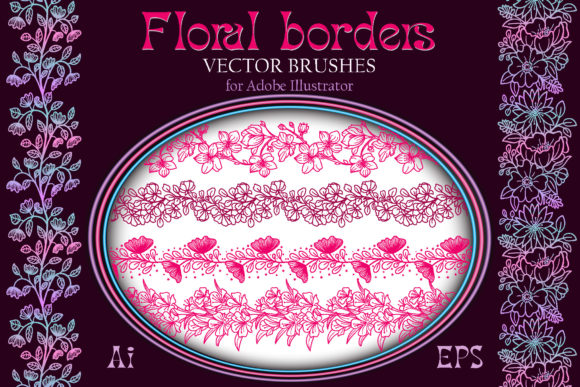
One of the most frequent mistakes beginners make is treating vector brushes like traditional stamps or fixed PNG files. When you purchase a set of 6 flexible, seamless, adjustable flower border brushes, you are acquiring a system, not just a picture. A common error occurs when a designer draws a straight line, applies the brush, and then attempts to manually stretch or distort the resulting shape using selection tools. This approach breaks the integrity of the vector path, leading to distorted petals, uneven spacing, and pixelated edges when scaled. The result is a unprofessional appearance that defeats the purpose of using vector graphics.
The correct approach leverages the core strength of Adobe Illustrator: path-based editing. Instead of manipulating the object after application, you must manipulate the path before or during application. By drawing a path of any shape or size—whether it is a gentle curve for an invitation header or a complex spiral for a poster background—and then applying one of the brushes, you achieve an instant, mathematically perfect result. This method ensures that the floral elements remain crisp and proportional, regardless of how much you resize or reshape the underlying path. If you find yourself fighting with anchor points after applying a brush, you are likely working against the tool rather than with it.
Software Compatibility and File Format Errors
A critical oversight that leads to immediate dissatisfaction is ignoring software requirements. It is vital to understand that these specific flexible brushes are engineered exclusively for Adobe Illustrator. A significant number of users attempt to import these brush files into Adobe Photoshop, expecting similar functionality. This is a fundamental misunderstanding of how the two programs handle vector data. Photoshop is primarily a raster-based program, and while it has some vector capabilities, it does not support the same dynamic brush engines found in Illustrator. Trying to use these brushes in Photoshop will result in failure, wasted time, and frustration.
Before making a purchase or beginning a project, always check your program software. The collection includes files for Adobe Illustrator CC and later, as well as an AI10 file for earlier versions of Adobe Illustrator. Additionally, an EPS 10 format is provided for use in other vector programs. However, "other vector programs" is a broad category. Not all vector software supports custom art brushes with the same fidelity as Illustrator. If you are using alternative software, you must verify its compatibility with EPS 10 brush definitions. Assuming universal compatibility without testing can lead to unusable assets. For those strictly using Photoshop, this product is not suitable, and seeking out raster-based alternatives would be a more prudent decision.
Overlooking Versatility in Application
Many creators limit their thinking to obvious applications, such as wedding invitations or greeting cards. While these are excellent use cases, restricting your imagination limits the return on investment for your design tools. The Vector Brushes Floral Borders are ideal for decorating a variety of projects that you might not initially consider. For instance, these brushes can elevate brand identity by adding organic touches to logos and social media headers. They can serve as elegant text dividers in eBooks or newsletters, breaking up dense content without disrupting the reading flow.
Consider the physical products market. These vector borders can be scaled infinitely for large-format prints, such as posters, pillow covers, and even t-shirts. Because they are vector-based, there is no loss of quality when scaling from a small business card to a large banner. A common mistake is designing for print at a low resolution or using raster images that blur when enlarged. By utilizing these adjustable brushes, you ensure that your designs remain sharp and professional across all mediums. Entrepreneurs and small business owners should recognize that this versatility allows for consistent branding across digital and physical touchpoints, enhancing brand recognition and perceived value.
Neglecting Editability and Customization
Another area where users fall short is failing to utilize the editability of the brushes. Some designers apply a brush and leave it as-is, missing the opportunity to customize the look to fit their specific aesthetic. Since the brushes are adjustable in size and shape, you can tweak the stroke weight, color, and opacity to match your project’s mood. You can also expand the appearance if you need to manipulate individual flowers within the border, although this should be done only after finalizing the path shape to preserve flexibility.
To avoid a generic look, experiment with combining different brushes from the collection. Using all six brushes in a single project can create depth and visual interest. For example, use a denser floral pattern for the main border and a simpler, leafy variant for secondary accents. This layering technique adds sophistication and prevents the design from appearing flat or repetitive. Remember, the goal is to enhance your painting toolbox, not replace your creative judgment. Use these tools as a foundation, then refine and adjust to create something unique.
Making the Right Choice for Your Workflow
When evaluating whether Vector Brushes Floral Borders are right for you, consider your current workflow and technical proficiency. If you are comfortable with Adobe Illustrator and frequently create designs that require decorative elements, this collection offers significant efficiency gains. It eliminates the need to draw each petal and leaf manually, freeing up time for conceptualization and client communication. However, if you are not willing to learn the basics of path manipulation in Illustrator, you may not fully benefit from these tools.
Always review the included files before starting a critical project. Ensure you have the correct version of the software installed. If you have any questions about compatibility or usage, do not hesitate to contact the seller. Proactive communication can save hours of troubleshooting. By approaching these brushes with a clear understanding of their capabilities and limitations, you can avoid common errors and produce stunning, professional-quality designs that stand out in a crowded marketplace. Whether you are a freelancer looking to speed up delivery times or a hobbyist wanting to create beautiful personal projects, mastering these flexible brushes is a step toward more efficient and impactful design work.